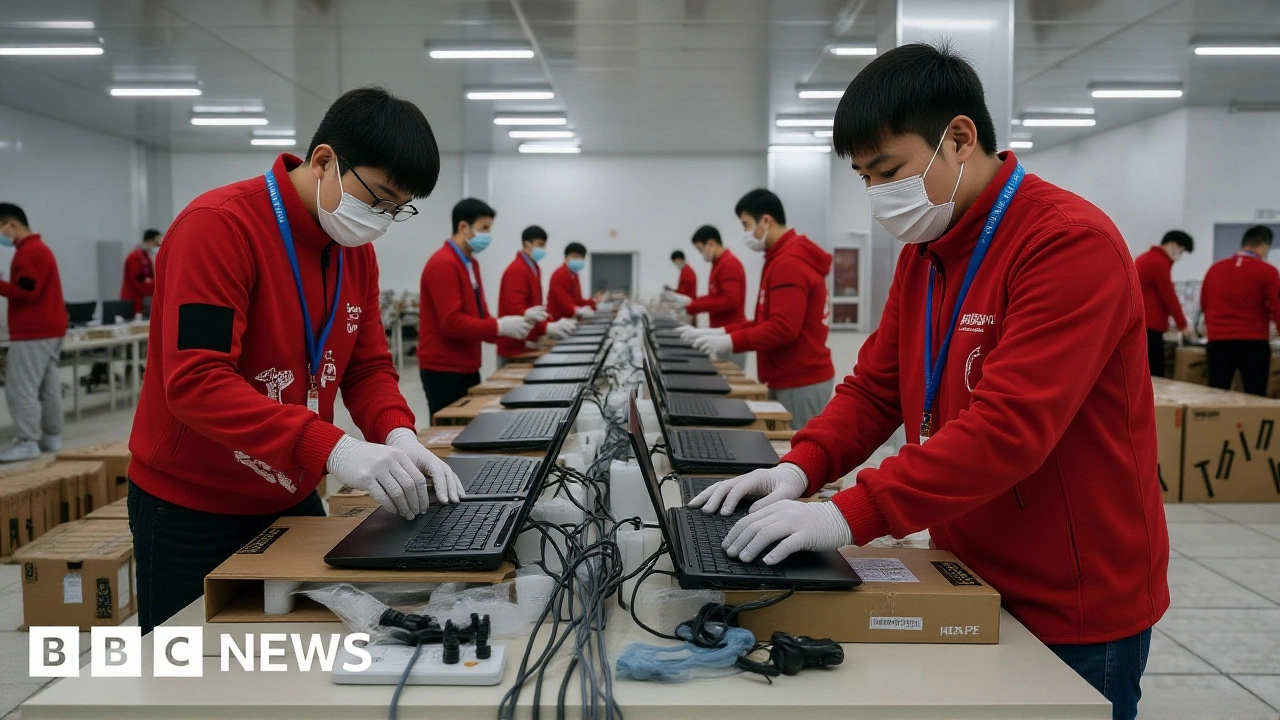
On a cold November morning in 2025, the UK government quietly revised its foreign investment review guidelines—not because of a scandal, but because it had no choice. Since 2000, China has poured £45 billion ($59 billion) into British technology firms, universities, and infrastructure projects. The scale isn’t just large—it’s strategic. And now, former GCHQ chief Sir Jeremy Fleming is warning that Britain has been dangerously naive. "We’ve handed over the keys to the castle," he told BBC Panorama. "They didn’t ask for permission. They just built the door."
How China Won the UK’s Trust—and Access
The turning point came in 2015, when Beijing launched its Made In China 2025 initiative. The plan wasn’t vague ambition; it was a 10-year roadmap to dominate ten core technologies: aerospace, robotics, electric vehicles, semiconductors, biotech, AI, new materials, marine engineering, railway systems, and power equipment. Unlike Western firms chasing quarterly returns, China’s state-backed entities played a 30-year game. And the UK, desperate for post-Brexit growth, opened its doors. AidData, a research group based in Williamsburg, Virginia, found that by 2025, the UK had become the top G7 recipient of Chinese high-tech investment per capita. Not because it was the richest, but because it was the most willing. Universities like Cambridge and Imperial College accepted millions in funding for AI labs. London’s startup scene welcomed Chinese venture capital with open arms. Even the NHS quietly partnered with Chinese firms on health data platforms.The Huawei Factor: 5G and the Invisible Infrastructure
Behind every smartphone signal, every smart city sensor, and every automated traffic light lies a web of 5G hardware. And Huawei Technologies Co., Ltd., headquartered in Shenzhen, controls nearly 30% of the global market. ZTE Corporation, also based in Shenzhen, holds another 15%. Together, they’ve built networks in over 170 countries—from Kenya’s police surveillance systems to Brazil’s digital courts. In July 2025, Spain triggered a diplomatic crisis when it contracted Huawei to store judicial wiretap data. The U.S. responded with sanctions. But the UK? It still allows Huawei to supply non-core 5G components. Critics say that’s like letting someone install your home alarm system but not the lock.Washington’s Countermove—and the Sovereignty Trap
In September 2025, the U.S. and UK announced a joint AI initiative worth £2.1 billion. On the surface, it looked like a win for British innovation. But CounterPunch called it "technological dependency by design." The deal requires UK AI firms to use American cloud infrastructure, comply with U.S. export controls, and share data under joint oversight. It’s not partnership—it’s integration. "The Americans aren’t offering a handshake," said Dr. Keyu Jin, economics professor at the Hong Kong University of Science and Technology. "They’re offering a leash. China offers markets. America offers control. The UK is being forced to choose between sovereignty and survival."
China’s Quiet Empire: Beyond Trade
While the West focuses on tariffs and sanctions, China is building something quieter—and more enduring. Its Global Development Initiative funds roads, ports, and power grids in Africa and Southeast Asia. Its Global Security Initiative trains police forces in Pakistan, Djibouti, and Kenya. Private military contractors, often linked to state-owned enterprises, secure Belt and Road projects. In Nigeria, Chinese security teams now patrol oil pipelines. In Sri Lanka, they run digital ID systems. The Information Society journal noted: "China isn’t just exporting tech. It’s exporting governance models."Who’s Watching the Watchdogs?
Meanwhile, techUK is preparing its UK-China Tech Forum 2025—scheduled for late November in London. The event’s agenda? "Market access strategies" and "trade facilitation." No mention of cybersecurity audits. No requirement for transparency in funding sources. Chatham House, the respected international affairs think tank in London, issued a blunt warning: "Western corporations must adapt to China’s emerging tech dominance—or be outmaneuvered. Policymakers are still asleep." The Russia-Ukraine war, ongoing as of November 2025, offers a grim contrast. Moscow clings to tanks and territory. Beijing builds networks and influence. One fights with force. The other, with fiber optics.
What’s Next? The November Decision Point
By December 1, the UK’s National Security and Investment Act will be reviewed. Will it block future investments in quantum computing labs? Will it force divestment from AI startups with Chinese minority stakes? Will it demand full disclosure of supply chains for critical infrastructure? Or will it proceed with the UK-China Tech Forum 2025 as planned—business as usual? The answer will shape not just Britain’s economy, but its place in the world for decades.Frequently Asked Questions
Why is China investing so heavily in the UK’s tech sector?
China’s investments aren’t random—they’re part of the Made In China 2025 strategy to dominate high-tech industries. The UK’s open investment regime, skilled workforce, and strong research institutions make it a prime target. Unlike in China, where foreign firms face restrictions, the UK has allowed Chinese entities to acquire stakes in AI startups, semiconductor labs, and data centers—giving Beijing access to cutting-edge tech and intellectual property.
How do Huawei and ZTE influence global tech infrastructure?
Huawei and ZTE supply 5G equipment to over 170 countries, including critical infrastructure in Africa, Latin America, and Southeast Asia. Their gear is cheaper and often comes with state-backed financing. But security experts warn their hardware could include backdoors for surveillance or disruption. The U.S. banned Huawei from its networks in 2019, yet the UK still permits limited involvement—creating a vulnerability in NATO’s digital backbone.
Is the U.S.-UK AI deal really beneficial for Britain?
The £2.1 billion deal accelerates UK AI development—but ties it to American cloud platforms, data rules, and export controls. While it brings funding, it also locks British firms into U.S.-centric ecosystems. Analysts say it undermines true tech sovereignty. China, by contrast, lets countries use its tech without demanding data sharing or political alignment. The UK may gain short-term growth, but at the cost of long-term independence.
What’s the risk of the UK-China Tech Forum 2025 going ahead as planned?
Holding the forum without stricter safeguards sends a signal that security concerns are secondary to trade. With Chinese state-backed firms still investing in sensitive sectors—like quantum computing and defense-linked AI—this event could normalize access to technologies that could be repurposed for espionage or military use. Critics argue it’s like hosting a cybersecurity summit while letting suspected hackers sit at the table.
How does China’s approach differ from Western tech dominance?
Western tech dominance relies on market forces and private companies like Apple or Google. China combines state planning with corporate power. Its firms don’t just sell products—they build entire digital ecosystems, often tied to government-backed financing, training programs, and security partnerships. This creates dependency without requiring military bases. The result? A quieter, more resilient form of global influence.
What should the UK do to protect its tech sovereignty?
The UK needs a three-part strategy: ban Chinese investment in defense-linked AI and quantum tech; require full transparency on funding sources for university research; and create a sovereign cloud infrastructure independent of U.S. and Chinese providers. It also needs to invest in homegrown alternatives—not just to compete, but to control. Without these steps, the UK risks becoming a tech colony, not a leader.